





This store requires javascript to be enabled for some features to work correctly.
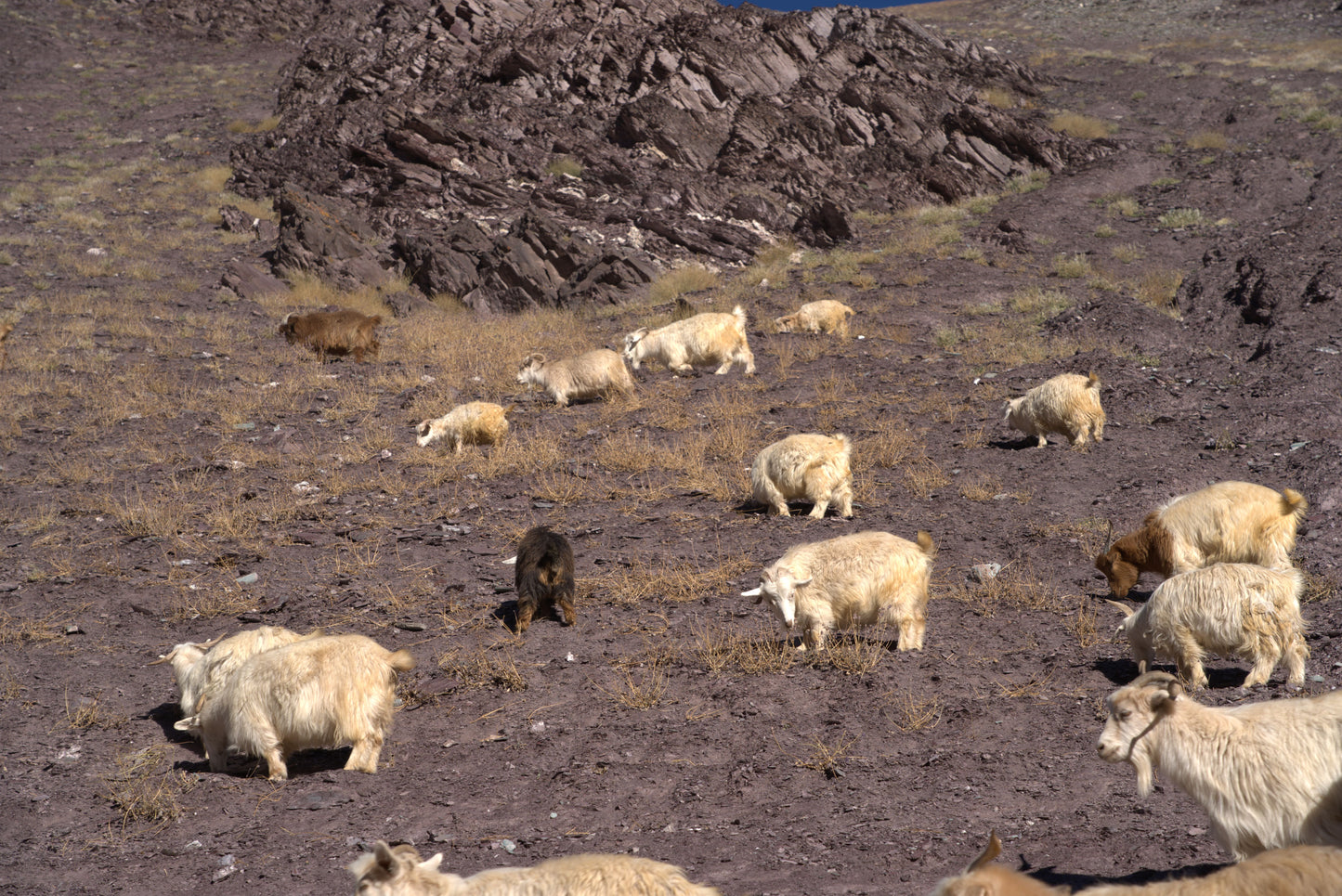
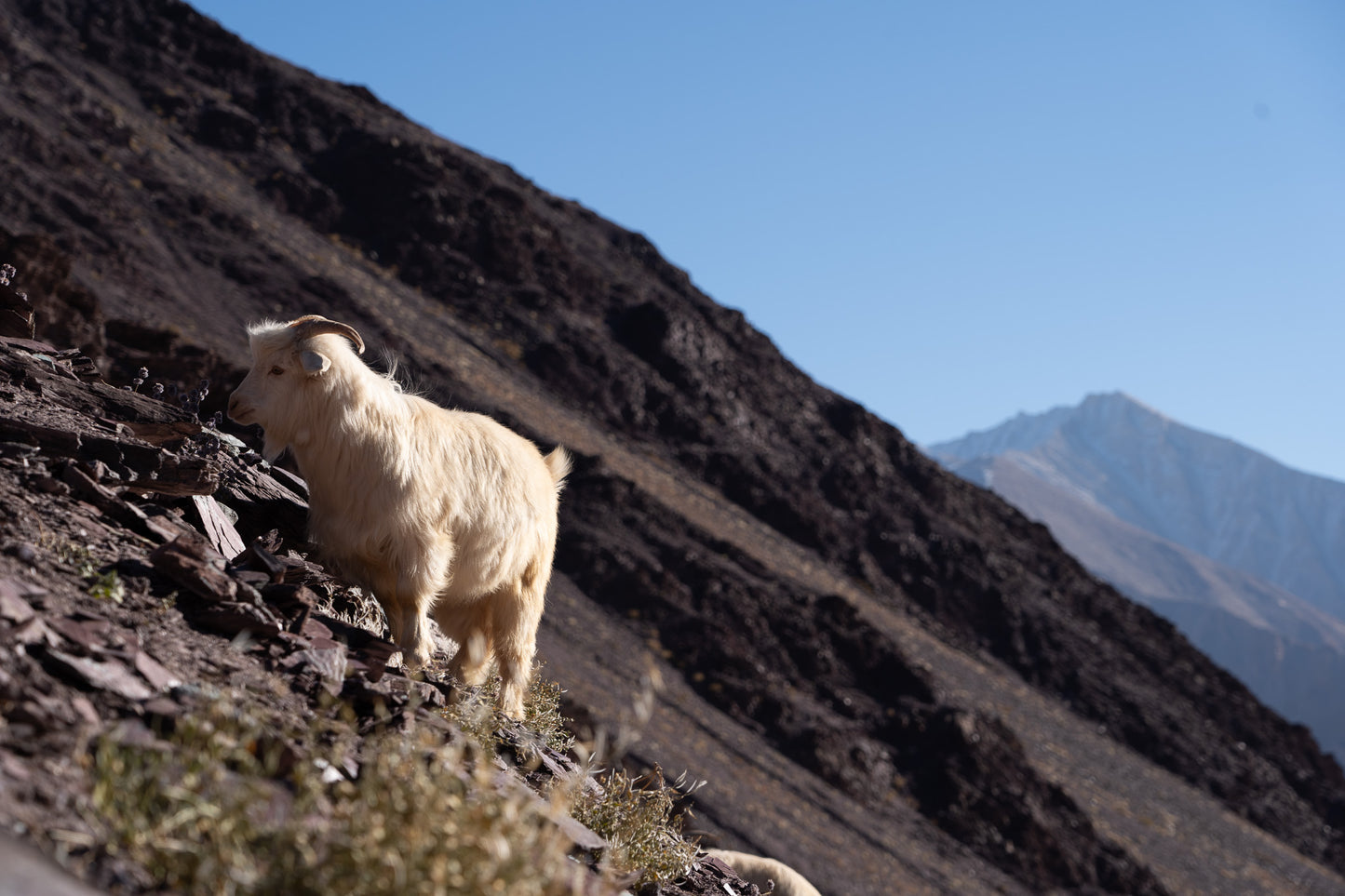
A fine type of cashmere wool obtained from the undercoat of the Changthangi goat. This wool comes primarily from the Ladakh region on the western slopes of the Himalayas, an area characterized by deep gorges, mountain ranges, and arid landscapes. Here, the Changpa nomads live in harmony with the seasons and nature, tending their herds. The goats owe their incomparably soft wool to the extreme temperatures of Ladakh. For the production of pashmina, the wool is exclusively taken from the chin and underbelly. In spring, the nomads carefully comb the wool. The individual fibers are then thoroughly inspected and processed according to traditional craftsmanship. The art of weaving and spinning the fibers in rhythmic, meditative movements has been passed down for generations and reflects the love, care, and cultural symbolism that make each piece unique. The entire creative process celebrates our values of mindfulness, joy of life, appreciation, and sustainability, resulting in a timeless and conscious product.
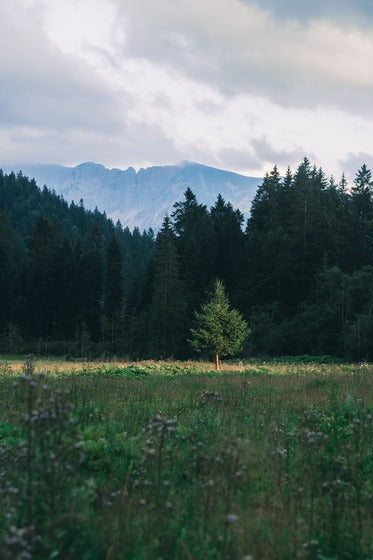
The goat herds are raised by the Ladakhi nomads, also known as Changpa nomads. Their homeland is the Changthang Plateau, located in eastern Ladakh and bordering the Tibetan region of China. This plateau is part of the Hindu Kush Himalayas. Ladakh stretches from the western slopes of the Himalayas to the Karakoram Mountains. Formerly part of the Indian state of Jammu and Kashmir, it is now a Union Territory. Known for its rich Tibetan Buddhist culture, Ladakh is often called "Little Tibet." It covers an area of 22,266 km² with an average elevation of 4,000–5,500 m above sea level. This region is considered the coldest desert in the world, with temperature fluctuations ranging from -40 to 40 degrees Celsius. Unlike many other nomadic communities, the Changpa do not traverse diverse climatic regions. Their habitat typically extends only about 15-55 km, and they migrate every few months. They follow the same routes and remain in the same campsites each year. Living in harmony with nature, the nomads follow the seasons. Their culture and way of life are deeply influenced by the natural conditions of the high-altitude region, and they play a vital role in preserving the ecological and cultural diversity of this remote area.

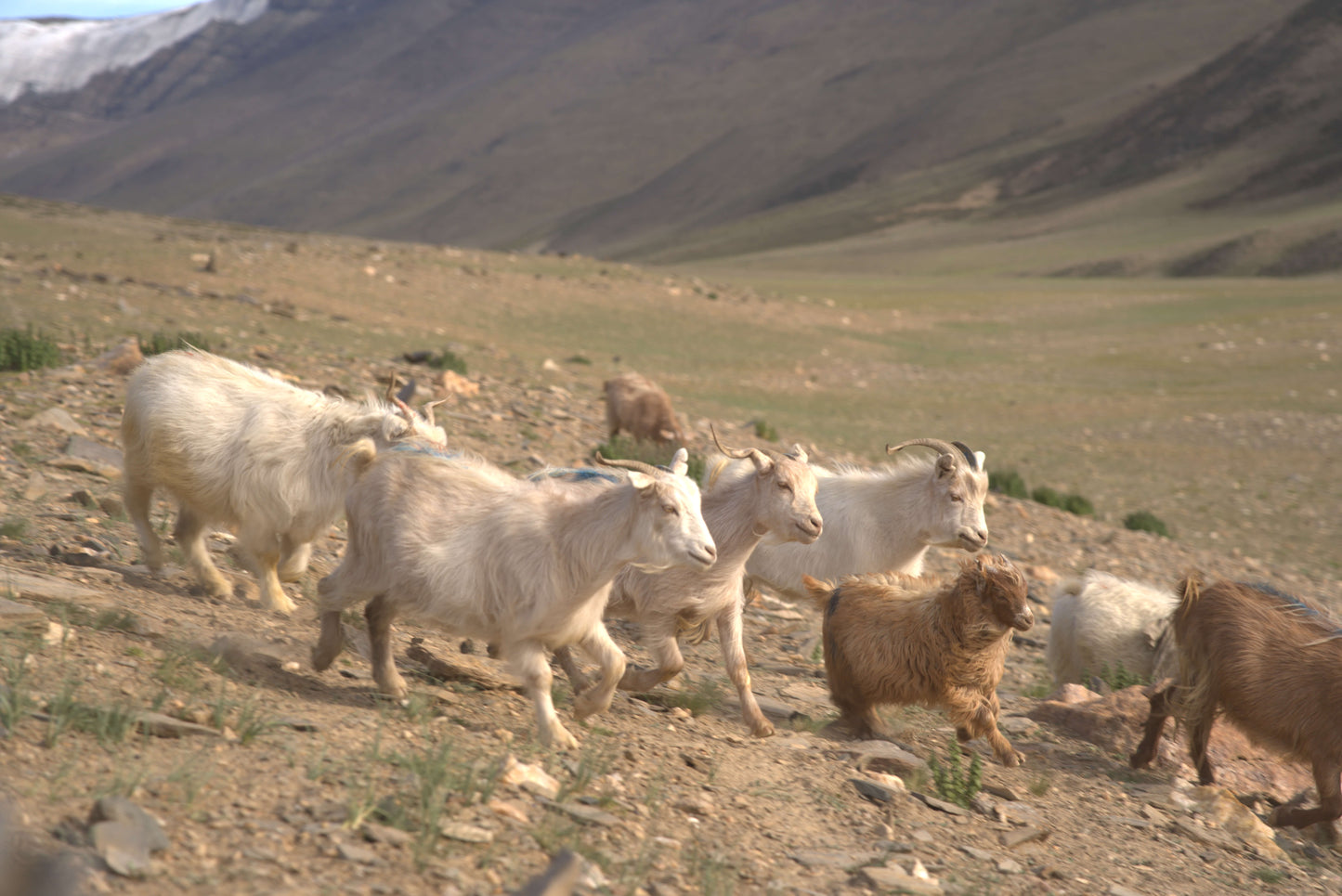
Ladakh Pashmina accounts for only about 1% of global cashmere production and is an example of sustainable, labor- and animal-friendly products. The herders live in harmony with nature and their animals, keeping small herds and practicing traditional, artisanal production. Nomadic practices passed down through generations, organic feed, and non-violent harvesting ensure ethical sourcing and the protection of natural resources. The average fiber fineness is 12-13 µm, with the finest hairs found on the belly and chin. Pashmina wool is collected during the spring molt, when the animals naturally shed their undercoat. Depending on weather conditions and the region, the goats' molt begins between January and the end of May. As temperatures rise, the insulating Pashmina pad detaches from the animals' bodies to prevent it from becoming a burden. The goats then appear larger and fluffier. The herders comb out the Pashmina with traditional combs to prevent it from being lost in the wild. During this process, some of the guard hairs are pulled out and mixed with the fine pashmina. The wool is then cleaned in a complex manual process to remove dirt and oil. Afterward, the coarse guard hairs are separated from the fine pashmina. To do this, the raw pashmina is stored in a humidified chamber so that the fibers can rehydrate. This facilitates the mechanical separation of the fibers by centrifugation: the finer fibers adhere to the carding bar, while the heavier guard hairs fall away.

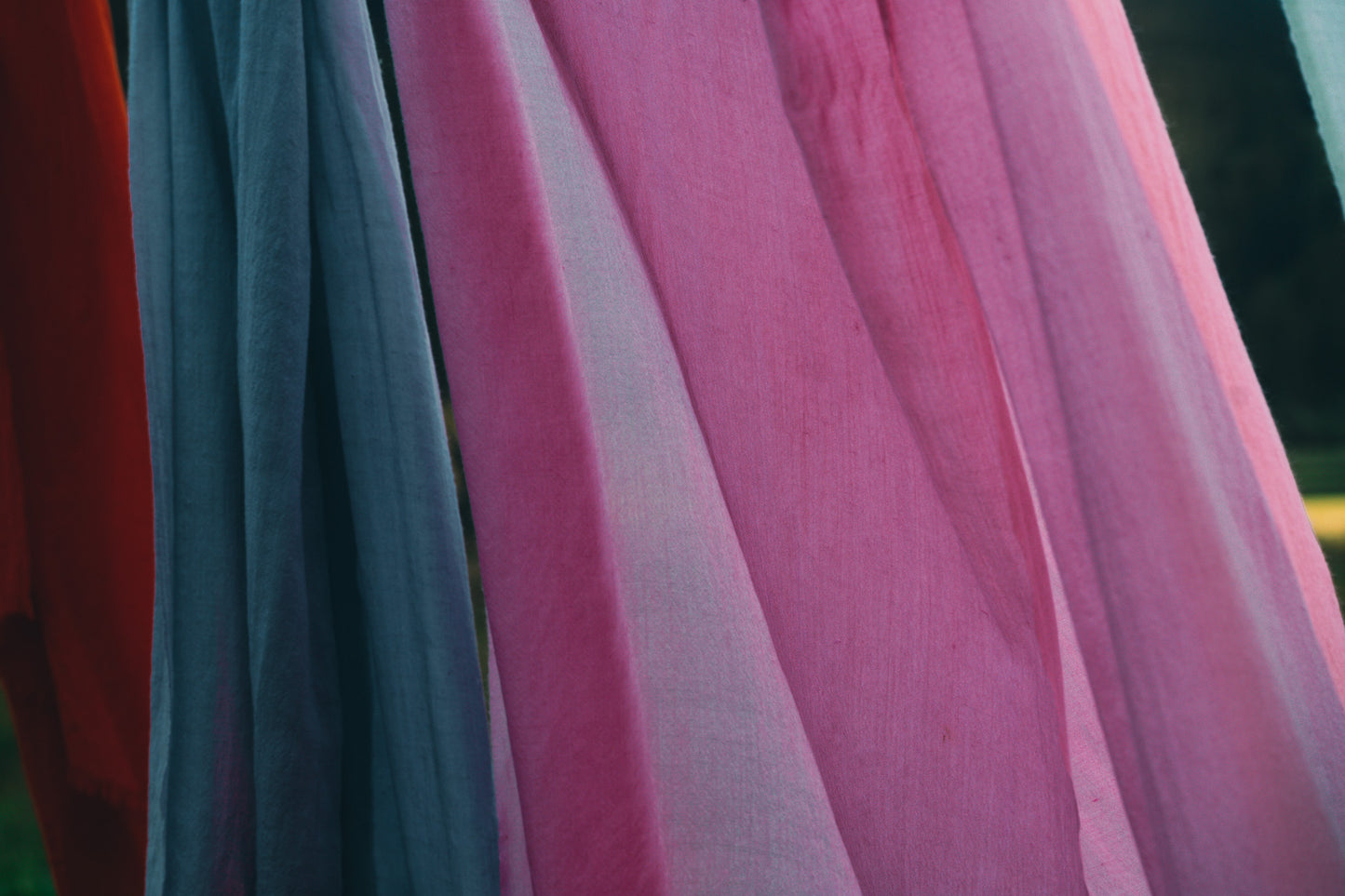
Our Breeze, Soulwarmer, and men's garments are finished directly in Ladakh, ensuring short production routes. Pashmina weaving is deeply ingrained in the Changpa people's identity, passed down visually and orally from generation to generation. The process combines weaving techniques with traditional handcrafts, reflecting the best of both worlds. We prioritize using long-staple fibers in our garments, giving them exceptional durability and beauty. For our Soulwarmer, the wool is hand-spun using a wheelless wooden spindle known locally as a phang. The yarn is then woven on handlooms by skilled women from the region. Only a steady hand and synchronized movements can produce the finest fabrics. Even the slightest change in pressure can ruin the material. It requires the eyes to follow the shuttle as it swiftly carries the thread from one end to the other, pausing briefly to allow the shafts to change. With our Breeze and Mens models, we combine millennia-old knowledge with modern technology. These models are spun and woven automatically in small workshops using traditional techniques. In this way, we bridge the gap between the past and future of weaving and carry on Ladakhi's textile heritage. Due to the fineness of the fiber, the production of Pashmina products is a painstaking, artistic, and time-consuming process.

Our Classic, Beloved and Adorned models are designed by
Handcrafted in small, family-run weaving workshops in Kashmir. Kashmir has been a renowned center for the production and trade of pashmina shawls for centuries. The craft dates back to antiquity, and Kashmir became famous during the Mughal era for its exquisitely woven and embroidered pashmina shawls. Kashmir's artisans are known for their exceptional skill. In a process requiring the utmost precision, the shawls are hand-spun, a process in which fibers are drawn and twisted together to form yarn. The partially pre-dyed yarn is then woven on a handloom, with a focus on a dense weave to create a durable shawl. This process can take up to a week. Families have been familiar with the art of pashmina weaving for generations. Intertwined with the culture and history of the region, each piece carries its own unique story, shaped by the artisans and their rhythmic, meditative, and devoted use of the loom. For our Adorned models, true artists use their needles to meticulously embroider the gossamer-thin pashmina shawls. Depending on the complexity, the hand embroidery process can take up to six weeks. Thus, millennia-old knowledge flows into each embroidered pashmina shawl, making it unique through its individual stitching.